

The Classical Music Training Path: From First Lesson to Advanced Performance

A child sits down for the first lesson, unsure whether their hands belong on the keys or the strings.
A parent watches closely, wondering what this could become.
Will it stay a short-term activity? Will their child really learn to read music? Could this grow into recitals, auditions, or something much deeper?
Those questions are common, especially for families in Coral Gables and South Miami who want more than another after-school slot on the calendar. They want a path that is structured, personal, and worth the commitment.
At Alberto Puerto Music, that path begins with personalized instruction in guitar and piano, shaped by mentorship rather than a one-size-fits-all system. The studio’s approach emphasizes artistic growth, serious foundations, and guidance from active professional musicians working within Miami’s cultural life.
This article is designed as a parent-friendly map of the classical music training path: what happens first, what comes later, and why long-term study matters.

What Is the Classical Music Training Path?
Essentially, the classical training path is a sequence of musical development: first building physical and reading foundations, then deepening technique and interpretation, then gaining performance experience, and eventually preparing for advanced goals such as auditions, juries, or competitions. Research in music learning consistently shows that musical growth is cumulative and that later artistry depends heavily on the quality of early training.
That matters for parents because it reframes lessons. A first lesson is not just about learning a song. It is the first step in building habits of listening, concentration, technical control, and artistic confidence. Scholars such as Gary McPherson, Susan Hallam, John Sloboda, and Jane Davidson have all shown, in different ways, that musical expertise develops over time through structured learning, high-quality practice, and supportive social environments.
Classical music training is not a rush to harder pieces. It is a gradual shaping of skill, attention, and artistic identity.
The First Stage: Building Strong Foundations
The first stage is often the quietest, but it may be the most important.
At this point, students are learning how to sit, how to hold the instrument, how to produce a clean sound, how to follow rhythm, and how to connect notation to movement. In piano and guitar study, that usually includes posture, hand position, tone, early reading, counting, and simple repertoire. These basics can look modest from the outside, but they shape everything that comes next.
McPherson and Renwick’s longitudinal work on children’s practice found that self-regulatory processes differ widely from the very earliest stages of learning, helping explain why some students progress more effectively than others. Their findings point to something parents often sense but cannot always name: early habits matter.
This is also where parents benefit from slowing down their expectations. A beginner does not need more complexity right away. A beginner needs reliable setup, clear sound, note recognition, and a sense of security with the instrument. That kind of measured beginning is especially important in classical training, where physical ease and reading fluency are built over time rather than patched in later.
The Growth Stage: Expanding Technique and Musical Understanding
Once students can orient themselves at the instrument, the next stage begins: technical growth with musical meaning.
This is where scales, arpeggios, tone control, articulation, phrasing, dynamics, memory strategies, and more developed repertoire begin to matter. Students are no longer only learning where the notes are. They are learning how a phrase breathes, where tension resolves, and how structure creates expression.
Susan Hallam’s research on practicing strategies shows that young musicians’ practice habits develop alongside expertise, and that motivation, support, and strategy use are all part of that picture. Her work also emphasizes that unstructured tuition does not produce the same outcomes as well-organized training. In one major synthesis, Hallam notes that the quality and duration of training both matter, with stronger effects associated with longer, well-structured engagement.
This stage is often when parents first notice a visible change. The child begins to sound more intentional. A scale no longer feels like a random assignment; it starts to support a piece. A phrase begins to sing. Practice becomes less about “getting through it” and more about solving musical problems.
Lehmann and Ericsson’s work on deliberate practice is useful here. In music, improvement does not come simply from time spent with the instrument nearby. It comes from structured, goal-directed work designed to push current ability forward. A meta-analysis by Platz, Kopiez, Lehmann, and Wolf found a strong relationship between task-relevant practice and musical achievement.
For parents, that means the right question is not “How many minutes did you practice?” but “What were you working to improve today?”

Practice Tip
Use one tiny goal per session.
Instead of asking your child to “practice everything,” choose one clear target:
smoother scale fingering
a cleaner tone in one phrase
a steadier rhythm in four measures
Research on deliberate and self-regulated practice suggests that focused, specific goals support better progress than vague repetition.
Performance Development
Students do not become performers all at once.
Performance development usually begins with small, contained experiences: an in-studio sharing, a recital piece, a masterclass comment, a short performance in front of peers. These moments teach students how to prepare under gentle pressure and how to communicate musically, not just execute notes.
This is where the research of John Sloboda and Jane Davidson becomes especially helpful. Their work on musical development found a strong relationship between achievement and formal practice, but they also point to the importance of consistency, structure, and the broader ecology around the student. Performance is not a separate track from learning. It is one of the ways learning gets consolidated.
Susan Hallam’s interviews with professional musicians also showed meaningful diversity in how musicians approach practice, which is a useful reminder for families: there is no single personality type that “belongs” in classical music. What matters is careful guidance, consistency, and a learning environment that helps students reflect on what they are doing.
At Alberto Puerto Music, performance development also fits our studio’s larger identity. Our story emphasizes interdisciplinary artistic life and collaboration through GG Art Space, creating a setting where students can see music not as an isolated technical drill but as part of a broader artistic culture in Miami.
That local context matters. For many children, the moment music becomes real is not in the practice room. It is when they play for others and feel that their work carries meaning.
Advanced Preparation
Advanced preparation is where long-term study starts to show its shape.
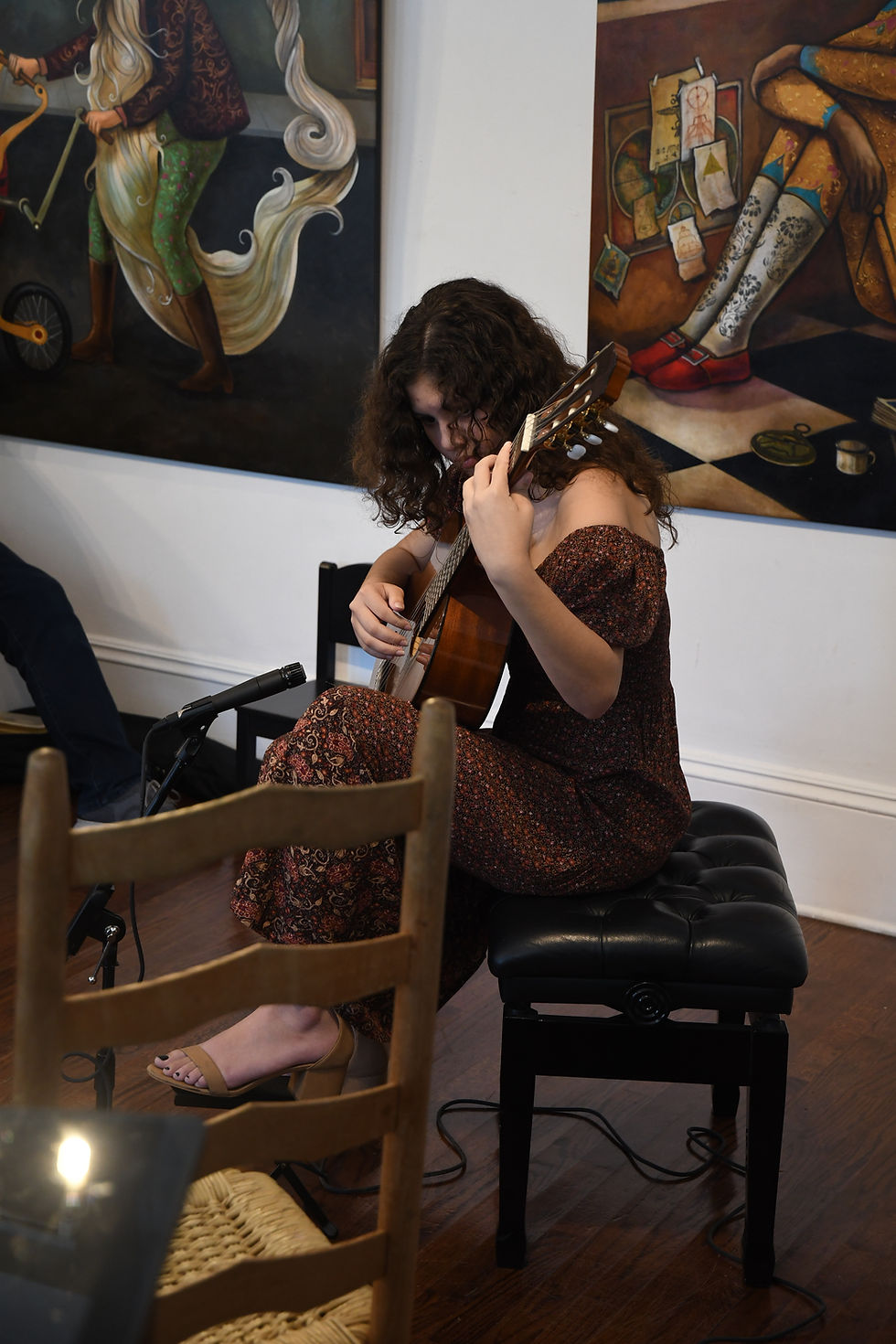
For some students, this includes audition repertoire, juries, graded assessments, competitions, chamber music, or magnet-school preparation. For others, it means reaching a more serious artistic level while still keeping music as one important part of a full life. Either way, this stage asks for more independence, more stamina, and more interpretive maturity.
Here the distinction between mere repetition and intentional preparation becomes very clear. Advanced students need to manage tempo planning, memory, tone consistency, expressive contour, and performance readiness. They also need feedback from teachers who can break large goals into sequence: what to fix first, what to refine next, and how to peak for a performance date.
For families in Coral Gables, this stage is often where lessons become less about “an activity” and more about a meaningful training path.
Why Long-Term Study Matters in Classical Music
Long-term study matters because classical musicianship is layered.
Students need time to build reading fluency, listening skills, technical coordination, expressive control, memory, and interpretive judgment. Those capacities do not appear at the same moment. They reinforce each other slowly. Research across music psychology and music education supports that view. McPherson’s work highlights the importance of self-regulation from early learning onward; Hallam’s research connects structured musical engagement with attention and self-regulatory processes; and the deliberate-practice literature shows that sustained, task-focused training is strongly associated with musical achievement.
It is also worth saying what the research does not say. Serious music study is not valuable only if a child becomes a professional musician. Andrea Creech’s work on parental support found that positive outcomes included not just achievement, but also motivation, self-esteem, self-efficacy, enjoyment, and satisfaction with lessons when parents supported the process in thoughtful ways.
That makes long-term study meaningful for a wider range of families. A child may pursue auditions and advanced repertoire. Another may simply become a more confident, expressive, disciplined young person who knows how to persist through difficulty and take pride in careful work. Both paths are valuable.
At AP Music, that long-term lens is aligned with our studio mission: to support artistic growth through exceptional instruction, mentorship, and connection to Miami’s cultural community.
How Families Can Support a Focused Musical Path
Parents matter more than most families realize, especially early on.
The research here is remarkably consistent. Davidson and colleagues found that the most successful young musicians tended to have parents who were highly involved in lessons and practice during the earliest stages. Creech later showed that constructive parent support includes behavioral support, cognitive support, and personal support, and that learning outcomes improve when parents create structure, communicate with the teacher, and remain a genuinely interested audience.
That does not mean a parent needs to become the practice police.
It means families can help by:
protecting a regular practice window
showing interest without hovering
noticing small milestones
keeping communication open with the teacher
helping the child see lessons as a long-term relationship, not a weekly test
One of the most helpful findings in Creech’s research is that support works best when it includes negotiation and respect for the child’s perspective, not just control.
That is a useful principle for parent-facing content because it mirrors what thoughtful teachers already know: children grow best when challenge and encouragement stay in balance.
Conclusion
The classical music training path is not mysterious once families can see its stages clearly.
It starts with posture, tone, and reading. It grows through technique, phrasing, and practice strategy. It deepens through performance. And for some students, it leads toward auditions, juries, and advanced artistic work.
What makes the path effective is not speed. It is thoughtful sequencing, long-term consistency, and the right mentor at the right time. Research from McPherson, Hallam, Sloboda, Davidson, Creech, Lehmann, and Ericsson all points in that direction: musical growth is developmental, relational, and cumulative.
For Coral Gables families looking for a serious but human path in music, that is the real promise of classical study. Not pressure for its own sake. Not rigid acceleration. A gradual formation of skill, confidence, and artistic identity.
Frequently Asked Questions
What instruments does Alberto Puerto Music teach?
Alberto Puerto Music specializes in personalized guitar and piano lessons in Coral Gables, with instruction shaped by classical training, individualized goals, and a broader connection to Cuban, Latin American, and contemporary repertoire.
How long does it take for a child to progress in classical music?
Most children show progress in stages rather than all at once. Early months are usually about setup, reading, and coordination; later stages bring stronger technique, deeper musical understanding, and performance readiness. Research in music development suggests that sustained, well-structured study matters more than rushing ahead.
Do parents need musical experience to support their child well?
No. Research on parental support suggests that what matters most is not expert musical knowledge, but constructive involvement: a stable routine, communication with the teacher, and interest in the child’s progress.
If your family is looking for a clear, serious, and personalized path in guitar or piano, Alberto Puerto Music offers trial lessons in Coral Gables designed to meet your child where they are and help shape what comes next. Visit with our lessons or book a trial to talk through your child’s goals with a mentor.

Comments